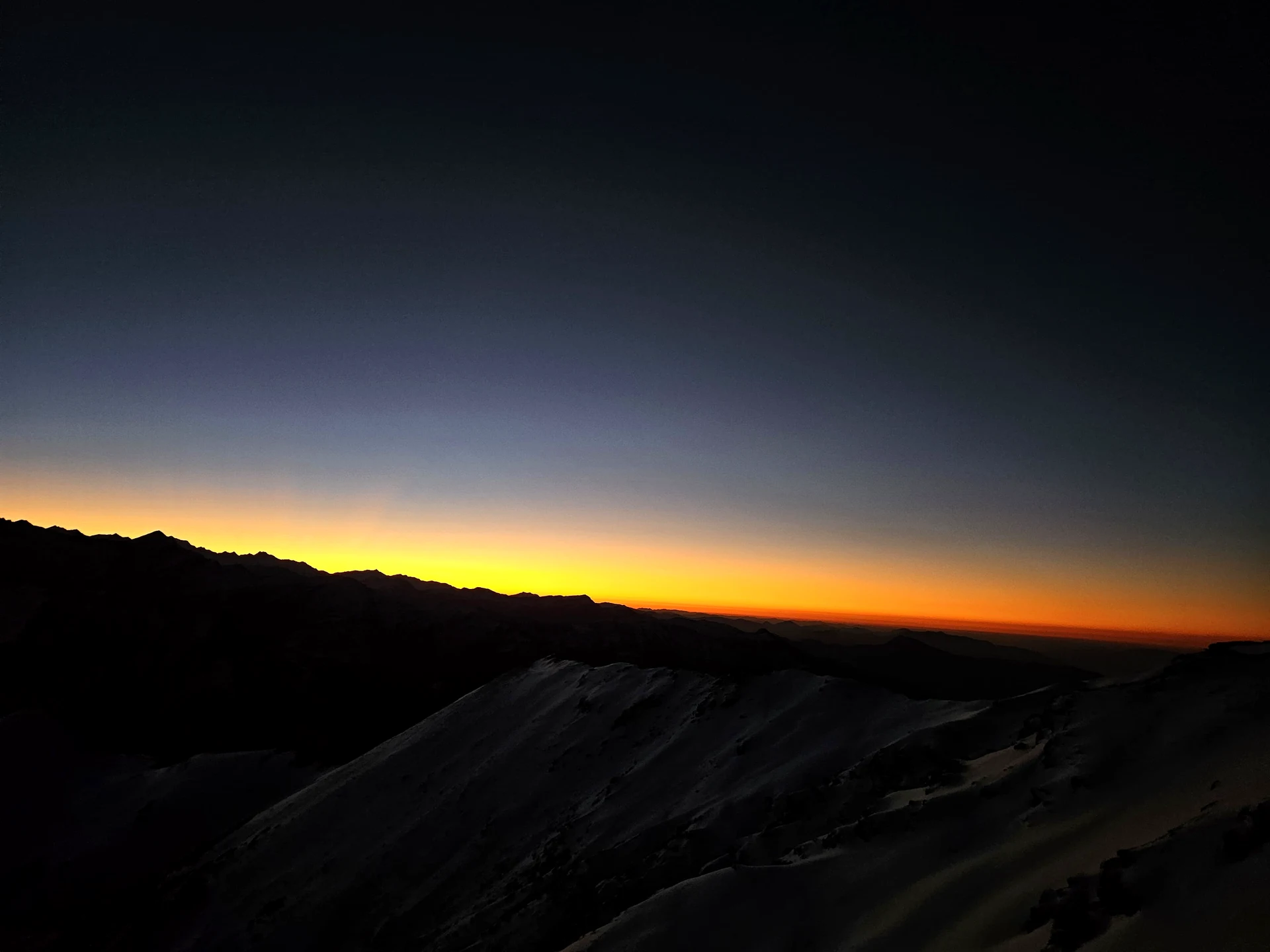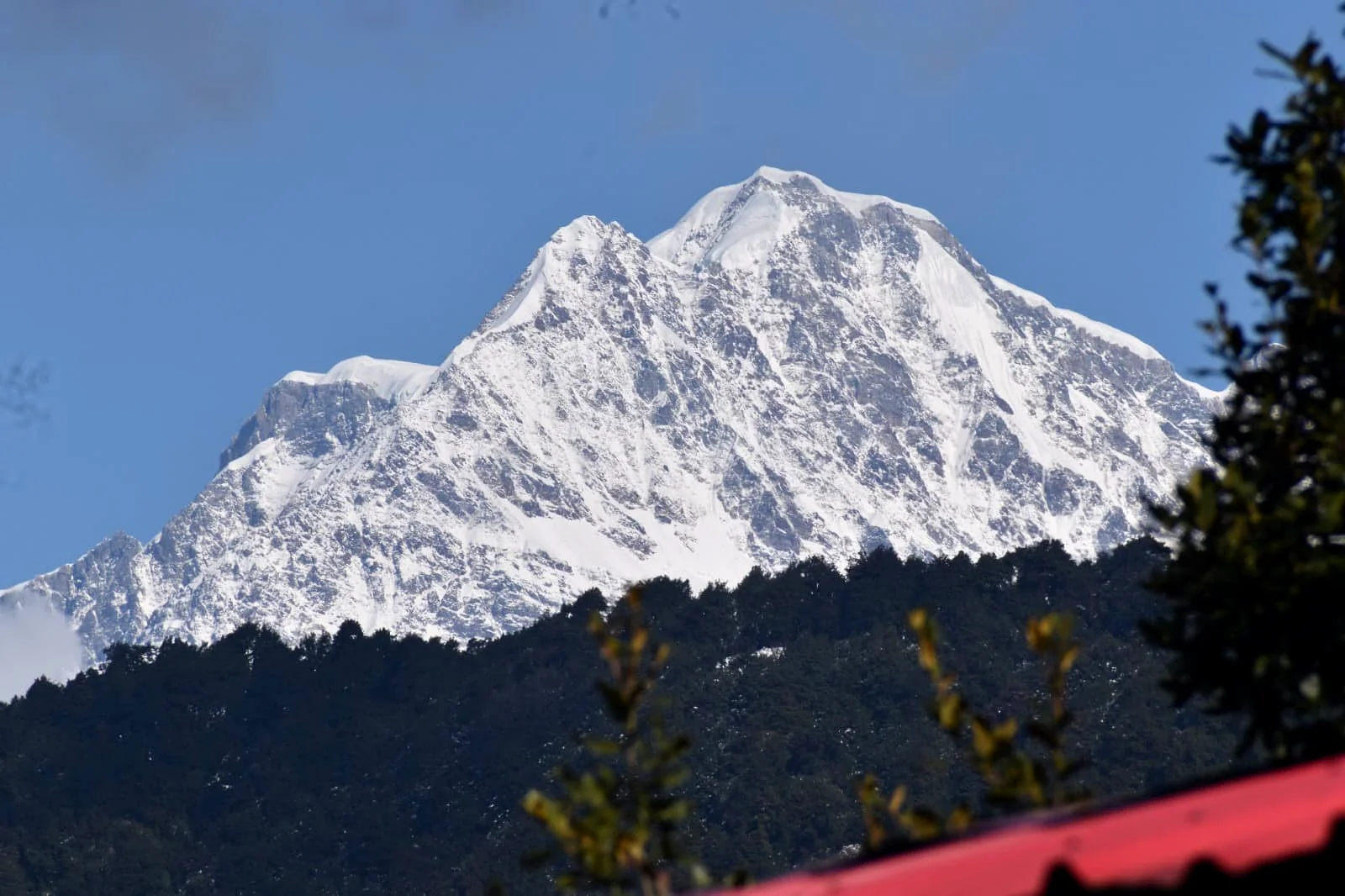
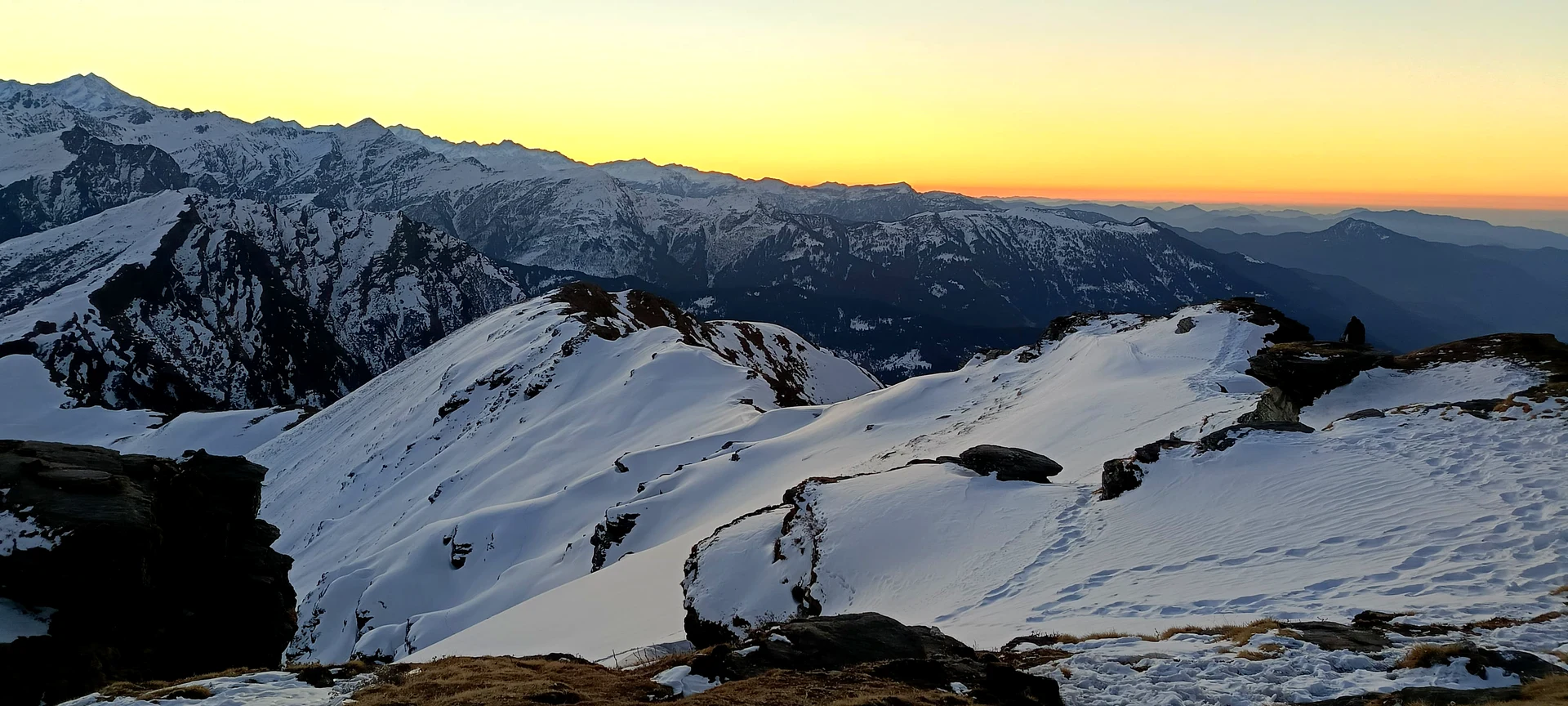
There are landscapes that make you stop mid-stride — not from exhaustion, but from sheer disbelief that a place this beautiful can exist. The Aali and Bedni Bugyals are that kind of place. Rolling, grass-carpeted meadows that stretch so far and so gently that the horizon seems to dissolve into the sky above Trishul and Nanda Ghunti.
"Often described as some of Asia's finest high-altitude meadows, the bugyals of Aali and Bedni are not just a destination — they are a state of mind."
Unlike a summit trek where the goal is a single dramatic peak, the bugyals reward you not at the end, but every single step of the way. This is slow trekking at its most magnificent — a journey that restores something quiet and essential in you.
Part One: A Walk Through the Sky Gardens
1. Lohajung — Where the Hills Begin to Breathe
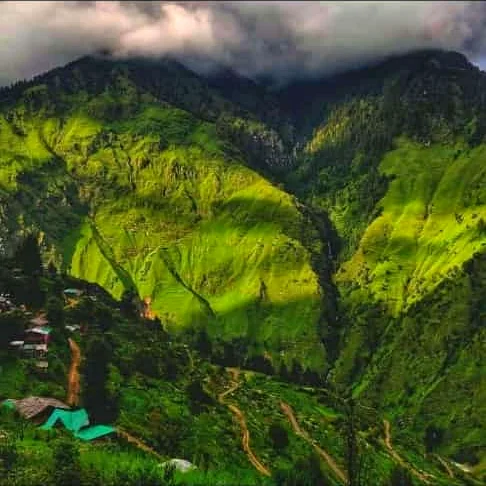
Your journey starts in Lohajung, a small, unhurried village perched at 2,200 m in the Chamoli district. Unlike a noisy highway town, Lohajung feels like an exhale. The air is already different here — cooler, lighter, carrying the faint scent of pine and wet earth after rain. For those arriving from the plains, the first evening in Lohajung is its own kind of arrival: the body begins to slow down before the trail even begins.
2. The Forest Corridor: Didna and the Climb into Silence
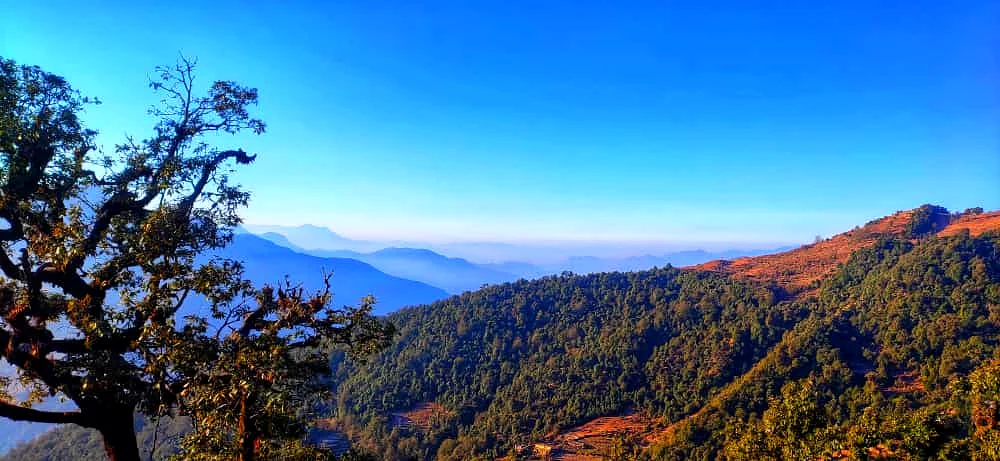
The trail from Lohajung to Didna village winds through dense oak and rhododendron forest, following an ancient shepherd's path. This section is the kind of trekking that strips away the mental noise of modern life — a narrow path, birdsong overhead, and the occasional sight of a gomphan (shepherd's shelter) from a hundred seasons past. Didna itself is a charming cluster of stone houses where the local community has been welcoming trekkers and their flocks for generations.
Altitude: ~2,400 m
Trail character: Forest path with steady ascent through oak, rhododendron, and walnut groves
Best for: Acclimatisation, a warm cup of chai with locals, and the first real mountain views
Local life: Didna is a living village — sheep, children, and cooking fires. Tread gently and greet warmly.
3. Aali Bugyal — The First Meadow, the First Revelation
Nothing prepares you for the moment the forest suddenly gives way to Aali Bugyal. At 3,350 m, the treeline falls away and the world opens — a vast canvas of rolling grassland, the colour of old gold in autumn and bright emerald in summer, stretching out beneath a sky that feels absurdly large. Trishul (7,120 m) and Nanda Ghunti (6,309 m) stand at the edge of this meadow like silent guardians, permanently snowcapped, permanently magnificent.
"Aali Bugyal feels like someone folded an entire alpine valley flat and laid it out just for you to walk across — unhurried, unobstructed, unlimited."
4. Bedni Bugyal and the Sacred Kund
If Ali is the grand entrance, Bedni Bugyal is the inner sanctum. At a similar elevation, Bedni stretches even wider, and at its heart lies Bedni Kund — a glacial lake held sacred by Hindu pilgrims en route to Roopkund. The kund sits still and dark against the meadow, ringed by a handful of stone shrines that have weathered monsoons and blizzards for centuries. Sitting beside it at dusk, watching the peaks catch the last light, is one of the most quietly profound experiences the Himalayas offer.
Three Things That Define This Trek
The Open Bugyals
Miles of unbroken alpine meadow above the treeline. In summer, they bloom with wildflowers; in autumn, they glow gold. Either way, the scale stops you in your tracks.
Trishul & Nanda Ghunti
A front-row panorama of two formidable Himalayan giants — Trishul at 7,120 m and Nanda Ghunti at 6,309 m — standing so close they feel touchable.
Bedni Kund
A sacred glacial lake at the heart of the meadow, ringed with stone shrines and centuries of pilgrimage. Quiet, spiritual, and entirely unforgettable.
Why Trek with Purpose?
The bugyals are among the most ecologically sensitive landscapes in the Himalayas. We design every Aali Bedni trek around three commitments:
-
Leave No Trace The Bedni Bugyal ecosystem is fragile. We carry out every piece of waste and follow strict no-fire policies above the treeline.
-
Support Local Communities Our guides, cooks, and porters are from Lohajung and Wan. When you trek with us, your money stays in the mountains.
-
Respect the Sacred Bedni Kund is a site of active pilgrimage. We brief every trekker on local customs — footwear, offerings, silence — before arrival.
Is This For You?
The Aali Bedni Bugyal trek is ideal for those who want the immensity of the Himalayas without the technical demands of a summit push. It asks for steady fitness rather than extreme athleticism — think long days on open terrain, not vertical scrambling. It's especially well-suited to nature lovers, photographers, and anyone who finds peace in wide, open spaces.
- Can sustain 6–10 km of walking over 5–6 hours
- Are comfortable camping in cold nights (temperatures drop to -5°C in shoulder season)
- Love open vistas more than summit glory
- Want to combine trekking with cultural and spiritual immersion
- Are doing your second or third trek and want a step up in duration and altitude
The 6-Day Itinerary
Every day on this route has its own distinct personality — dense forest, open meadow, sacred lake, and panoramic ridgeline. Here's how the journey unfolds from Lohajung to the heart of the bugyals and back.
-
Arrive Lohajung · 2,200 m
Transfer from Rishikesh or Haridwar (~9–10 hrs by cab via Karnprayag and Tharali). Settle into your guesthouse, take a slow evening walk through Lohajung village, and acclimatise over a warm meal. The peaks of Trishul and Nanda Ghunti are already visible on a clear evening — an early promise of what lies ahead.
-
Lohajung → Didna Village · 2,400 m · ~8 km
Your first day on trail descends briefly into the Neel Ganga valley before climbing through dense mixed forest to Didna. The path is well-worn and forgiving — good for shaking off travel fatigue and finding your trekking rhythm. Camp in Didna's meadow with the first real views of the surrounding ridges.
-
Didna → Aali Bugyal · 3,350 m · ~7 km
The forest climbs steeply at first before the treeline breaks and the world opens into the sky. Your first glimpse of Aali Bugyal — its vast golden-green carpet spread beneath Trishul — is one of the most striking moments of any trek in Uttarakhand. Pitch camp in the meadow as the peaks turn rose-gold in the fading light.
-
Aali Bugyal → Bedni Bugyal → Pathar Nachauni · 3,660 m · ~8 km
The heart of the trek. Cross the wide expanse of Aali Bugyal in the morning, watching mist lift off the grass as the day warms. Arrive at Bedni Bugyal and Bedni Kund — take time here, sit by the sacred lake, absorb the silence. Continue to Pathar Nachauni for the highest camp of the route, with panoramic views of the entire Garhwal horizon.
-
Pathar Nachauni → Wan Village · 2,400 m · ~10 km
Descend through the bugyals one last time — you'll find yourself pausing every few hundred metres to look back. The trail drops steeply through forest into Wan village, a different route from the ascent that shows you a new face of the landscape. Wan is welcoming, with local homes, warm kitchens, and a well-earned hot meal.
-
Wan → Lohajung → Rishikesh (Departure)
A short drive returns you to Lohajung for breakfast, before the long descent by cab back to Rishikesh or Haridwar (~9 hrs). The drive through the Chamoli valleys is beautiful in its own right — a slow, river-hugging decompression back to the plains. Drop-off by late evening.
Part Two: Planning Your Aali Bedni Bugyal Journey
Great trekking begins before you ever set foot on the trail. Here's the essential planning guide for making your Aali Bedni experience safe, smooth, and unforgettable.
1. The Journey: How to Reach Lohajung
Your gateway is Rishikesh or Haridwar, both of which are well-connected to the rest of India.
✈️ By Air
Fly into Jolly Grant Airport (DED), Dehradun. From the airport, Rishikesh is ~20 km. We recommend arriving a day early to rest before the long mountain drive.
🚂 By Rail
Haridwar Railway Station is the most convenient railhead. The overnight Yoga Express from Delhi is a popular choice — you wake up at the foothills, ready to head higher.
🚗 Mountain Drive
From Rishikesh, it's a scenic 9–10 hour drive (approx. 230 km) to Lohajung via Devprayag, Karnprayag, and Tharali. We arrange shared or private cabs — the drive through the Alaknanda valley is a journey in itself.
2. Timing the Magic: Best Time to Visit
Aali Bedni Bugyal is a year-round destination in theory, but two seasons offer the most rewarding conditions for trekking.
Summer · May – Jun
The meadows are lush green and carpeted with wildflowers. Visibility is sharp, snow still caps the peaks, and the trails are at their most welcoming.
Autumn · Sep – Nov
Post-monsoon clarity brings the sharpest panoramas of Trishul and Nanda Ghunti. The grass turns gold. Fewer trekkers, deeper solitude.
Monsoon · Jul – Aug
Heavy rainfall makes the trails slippery and visibility poor. The meadows are vibrantly green but landslide risk is elevated. Not recommended.
3. Beyond the Bugyals: What to Explore Nearby
The Chamoli region is one of Uttarakhand's richest — don't limit yourself to just the trek.
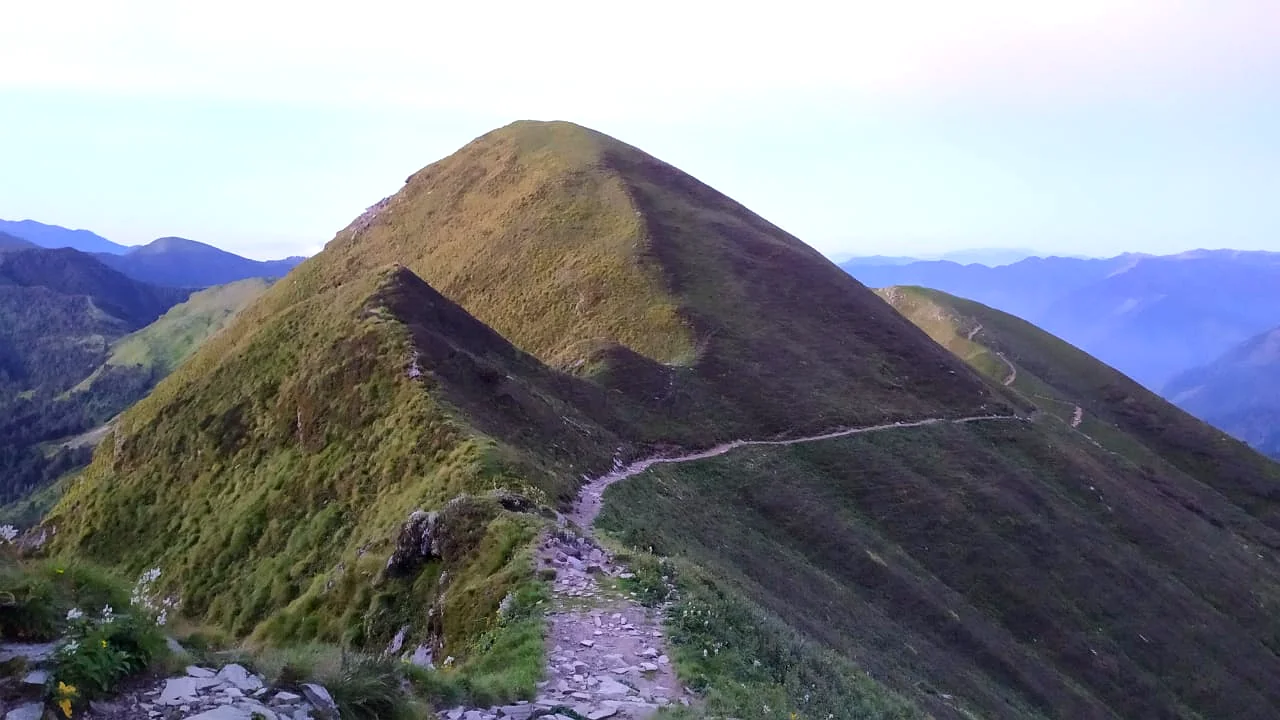
- Roopkund Trek: The Aali Bedni trail forms the lower portion of the famous Roopkund route. Experienced trekkers can extend the journey to the skeleton lake at 4,800 m — a different world entirely.
- Karnprayag & Nandprayag: Two of the sacred Prayags (river confluences) on your drive to Lohajung. Worth a brief stop for a chai and a quiet moment by the confluence.
- Wan Village: The end-point of the descent route, Wan has a gentle, traditional character. The local weaving cooperative produces beautiful woollen products — a meaningful souvenir from the mountains.
4. Preparation & Precautions: The Mindful Trekker's Approach
The bugyals ask for respect, not conquest. Here's how to walk into them well-prepared.
Base Layer
Moisture-wicking thermal — essential for cool mornings and cold camp nights, even in summer.
Mid Layer
Fleece or light down jacket — the meadow wind is relentless at altitude. Pack it accessible, not buried.
Sun Protection
SPF 50+ sunscreen, UV-blocking sunglasses, and a brimmed hat. Open meadows offer zero shade and high UV.
- Build Your Base: The trek is moderate but multi-day. Start 30–45 minutes of daily walking or cardio at least 3 weeks before you arrive. Your joints and lungs will thank you on Day 3.
- Hydrate Constantly: At altitude, dehydration accelerates. Carry at least 2 litres of water and drink before you feel thirsty. Our camps provide boiled water every morning and evening.
- Altitude Awareness: The route climbs gradually, which naturally aids acclimatisation. If you feel a persistent headache or fatigue at camp, rest an extra half-day — never push up with symptoms.
- Meadow Etiquette: Stay on the trail through the bugyals. The grass is a living ecosystem grazed by shepherd communities for generations. Cutting switchbacks damages root systems that take years to recover.
If you experience persistent headache, nausea, or dizziness above 2,500 m, tell your guide immediately. The golden rule: never ascend with symptoms. Our guides are first-aid certified and carry pulse oximeters on every trek. Descending even 300 m relieves symptoms rapidly.
Essential Gear Checklist
Pack smart, pack light. Everything you need for this trek — nothing you don't.
- Warm down jacket (800-fill or equiv.)
- Waterproof hardshell jacket
- Thermal base layer (2 sets)
- Warm trek pants + waterproof overtrousers
- Insulated gloves + liner gloves
- Balaclava + warm hat
- Trekking boots (high ankle, waterproof)
- Gaiters
- Woollen socks (4+ pairs)
- Trekking poles (strongly recommended)
- Sleeping bag (–10°C rated)
- Headlamp + spare batteries
- Sunscreen SPF 50+
- UV-protective sunglasses
- Personal first-aid + altitude meds
- Water purification tablets / filter
- Dry bags for electronics
- Trek snacks & electrolytes
Frequently Asked Questions
What is the difference between Aali Bugyal and Bedni Bugyal?
Both are high-altitude alpine meadows (bugyals) on the same trekking route. Aali Bugyal sits at around 3,600 m — open and expansive with views of Trishul and Nanda Ghunti. Bedni Bugyal (3,354 m) is slightly lower but features the sacred Bedni Kund lake and ancient temple. Together they form one of the most beautiful continuous meadow corridors in the Himalayas.
How difficult is the Aali Bedni Bugyal trek?
Moderate to Challenging. The daily distances and altitude gains are manageable, but Day 6 (to Bhagwabasa at 4,400 m) requires solid fitness and good acclimatisation. We build in rest and acclimatisation days to ensure your body adjusts safely.
What is the maximum altitude?
The main trek reaches Bhagwabasa at 4,400 m. For those doing the Roopkund extension, the altitude climbs further to around 4,800 m. Both require good fitness and altitude awareness — we monitor trekkers carefully throughout.
Is a permit required?
Yes — the trek passes through the Nanda Devi Biosphere Reserve buffer zone and requires forest entry permits. We handle all paperwork as part of the package. Carry your original government ID.
Is this suitable for solo travellers?
Absolutely. Solo travellers join small groups of 4–8 people — it is one of the most social trek formats. The shared experience of multi-day high-altitude trekking creates genuine connections. Many solo trekkers consider it their most memorable mountain trip.
What is the best time for this trek?
May–June for green meadows, wildflowers, and stable weather. September–October for crystal-clear skies and golden meadow hues. The trek is not recommended during the monsoon months (July–August) due to trail conditions.
Can I extend to Roopkund from this route?
Yes — Roopkund (4,800 m), known as the "Mystery Lake" for its skeletal remains, is an extension from this route. Add 2 days to your trek. Let us know when enquiring and we'll design the combined itinerary.
How long is the full trek?
The standard Aali Bedni Bugyal route is 6 days including travel to/from Rishikesh. The trekking portion covers approximately 33 km round trip, with daily distances between 7 and 12 km.
Ready to walk the sacred bugyals?
Check availability, get a custom quote, or ask us anything — no pressure, just honest answers from people who love these mountains.