There is a specific kind of silence that only exists at 12,500 feet. It's not the absence of noise, but a presence of something much larger — a stillness that makes you realize how small, yet how connected, we truly are.
"Often called the 'Queen of Winter Treks,' Kedarkantha isn't a peak you conquer; it's a summit that invites you in."
For those looking to swap the digital noise of the city for the rhythmic crunch of fresh snow, this journey is less about the miles covered and more about the perspective gained.
Part One: A Winter Love Letter to the Trail
1. Slow Living in Sankri
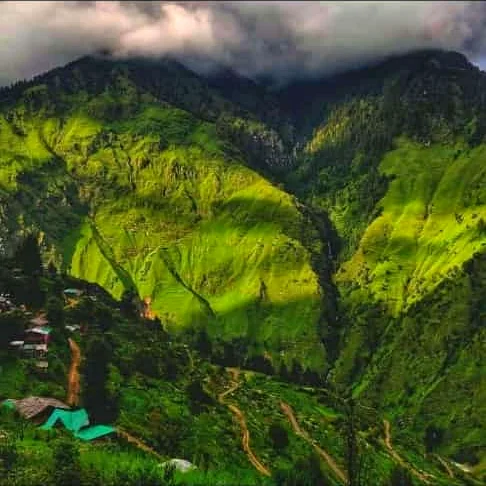
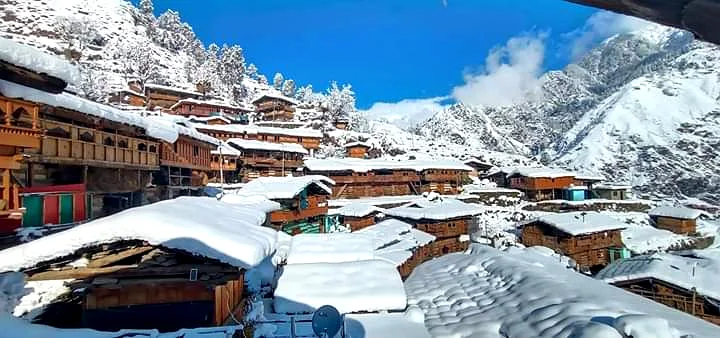
Our journey begins in Sankri, a village that feels like a secret kept by the mountains. Here, the "hustle" is replaced by the smell of woodsmoke and the genuine warmth of the Garhwali people. For couples, it's the perfect "unplugged" start — no notifications, just the crisp mountain air and the sight of apple orchards resting under a blanket of white.
2. Reflections at Juda Ka Talab
The trail to Juda Ka Talab is a masterclass in nature's design. Walking through dense pine forests where sunlight filters through the canopy in golden shards, you'll reach the legendary frozen lake. It's an ethereal spot for a quiet moment. There's a local humility in the legends of this lake, and standing beside its glassy, frozen surface, you can't help but feel a deep respect for the elements.
Altitude: ~2,700 m
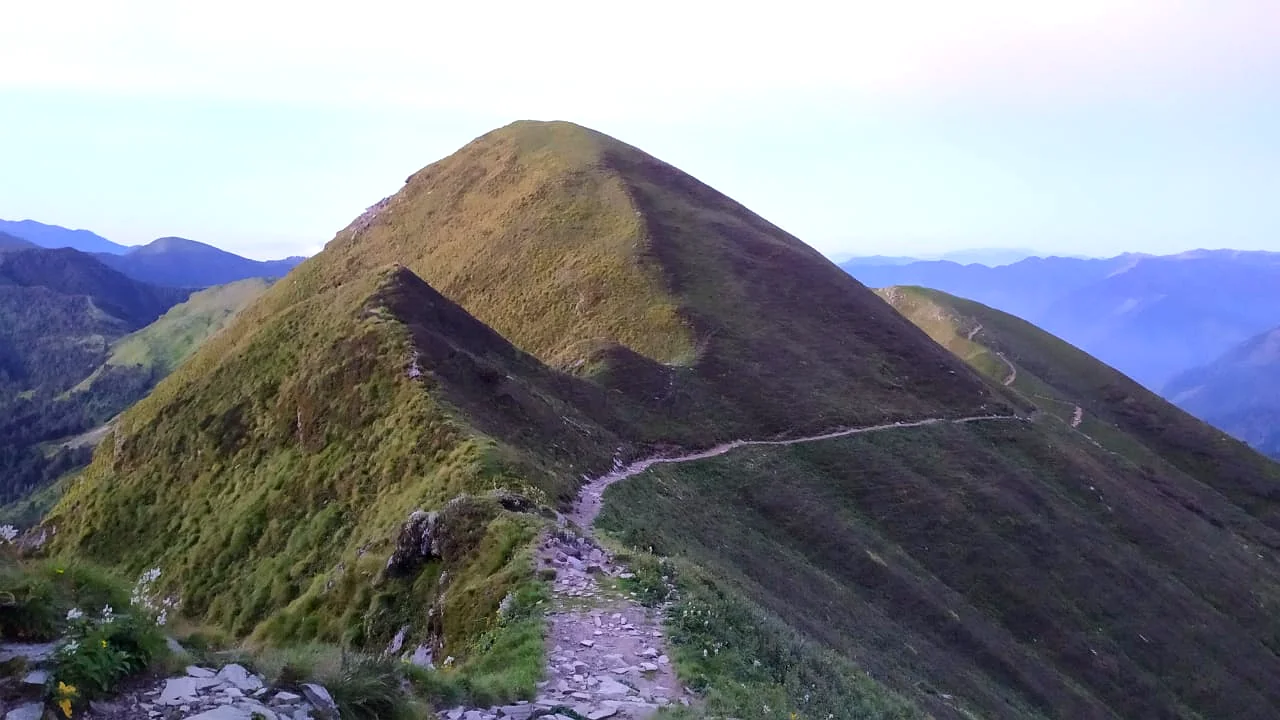
Trail character: Gradual climb through dense pine and oak forest
Best season: December–March when the lake freezes over completely
Local lore: The lake is said to be the spot where Lord Shiva meditated — a place where even the water shows reverence.
3. The "Main Character" Moment: The Summit Push
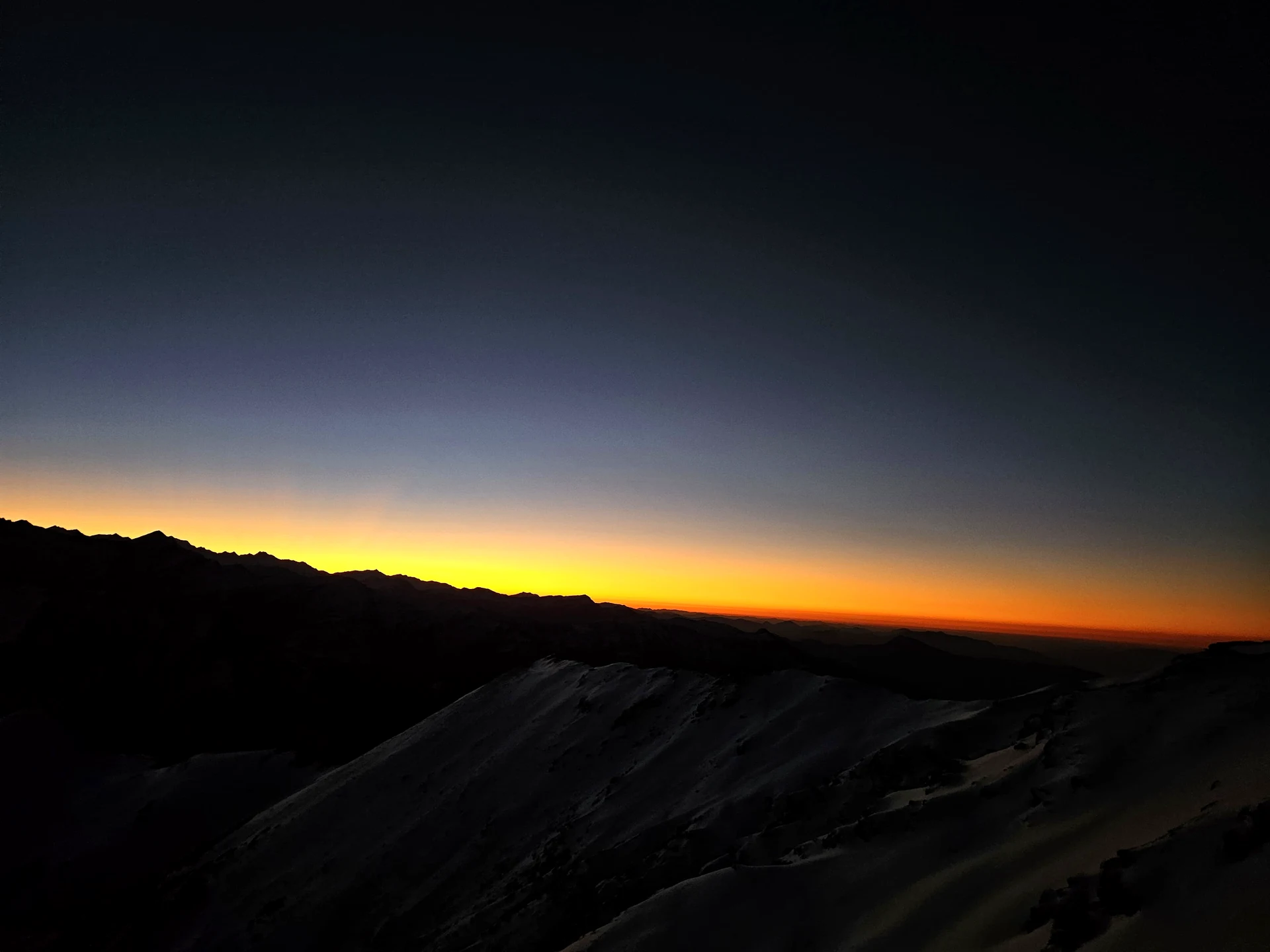
The climb to the summit is a lesson in patience. Starting under a canopy of stars that feel close enough to touch, the final ascent is a physical and mental meditation.
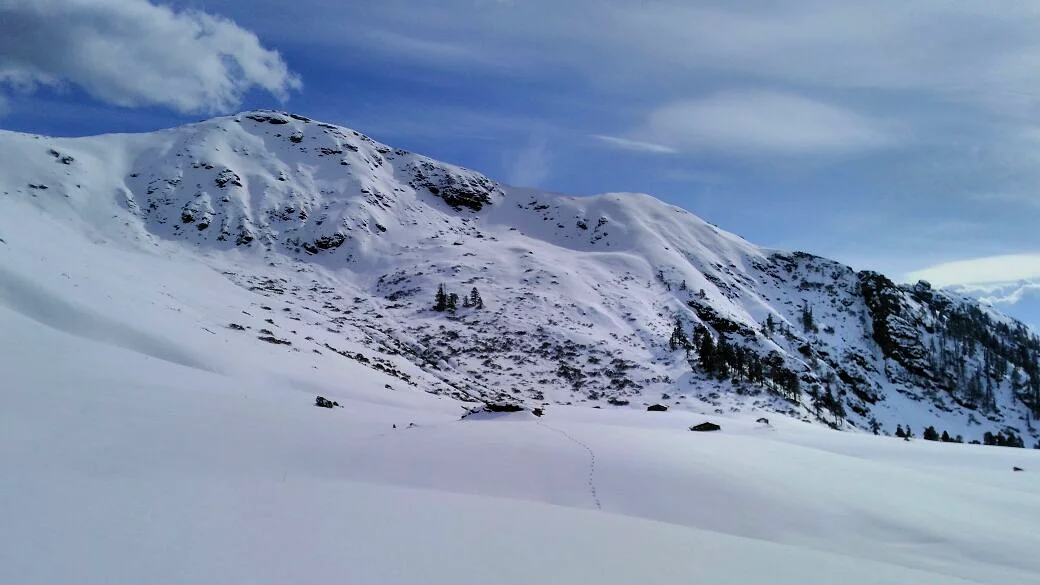
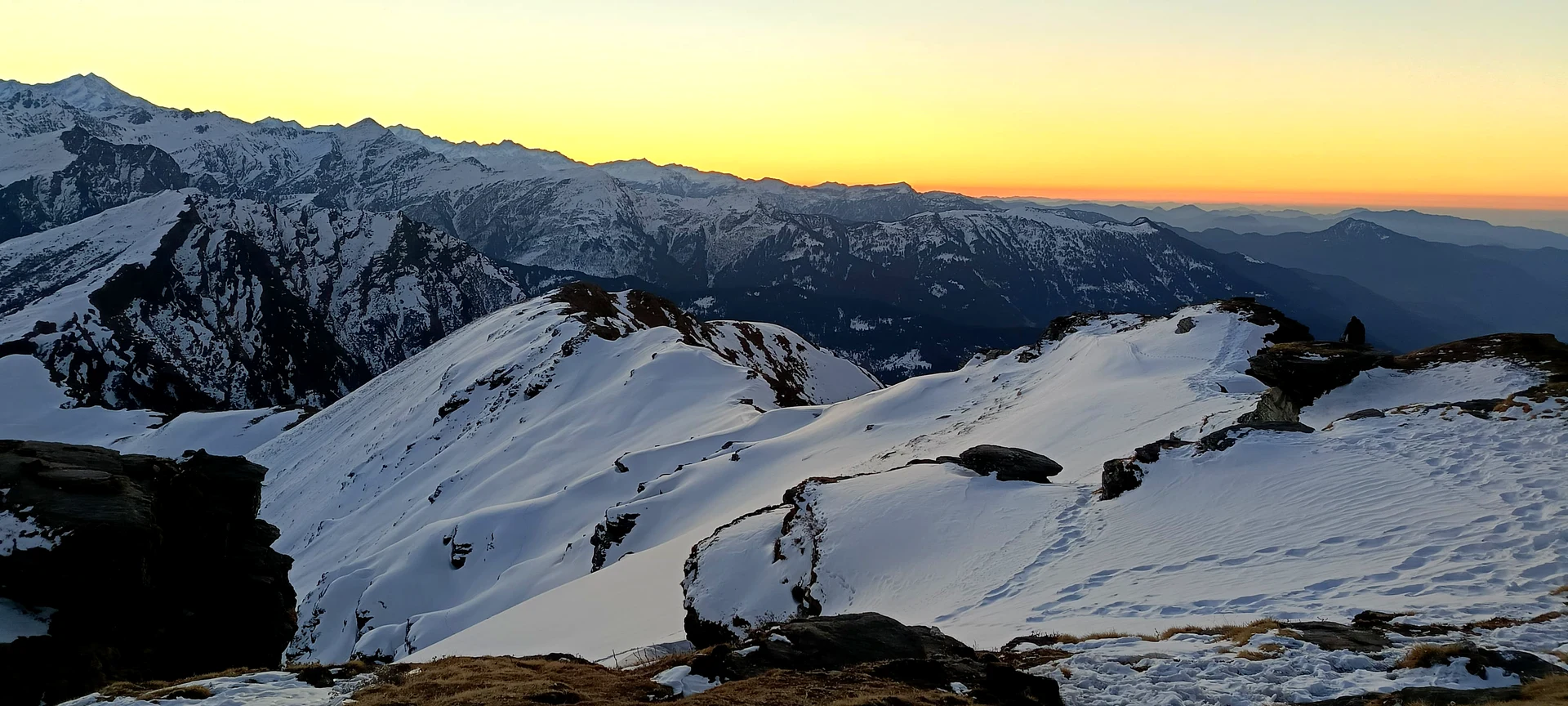
When the sun finally breaks over the horizon, painting the Swargarohini and Bandarpoonch ranges in hues of rose-gold and apricot, the world feels brand new. This isn't just a photo-op for the grid; it's a moment of shared triumph that stays with you long after the snow has melted from your boots.
"The summit of Kedarkantha gives you a 360° panorama of some of the most iconic peaks in the Garhwal — a view that simply cannot be put into words, only felt."
Three Things That Define This Trek
The White Wilderness
Snow-laden cedar forests so thick the light turns silver. The forest trail to base camp is a slow, meditative walk — the kind that clears the mind completely.
Juda Ka Talab
A sacred frozen lake at 2,700 m, ringed by pine trees. In winter it holds a perfect mirror of ice — and centuries of local lore stretching back to Lord Shiva.
The Summit Sunrise
360° views of Swargarohini, Bandarpoonch, and Black Peak painted in rose-gold at first light. It's the kind of moment you'll describe to people for years.
Why Trek with Purpose?
We believe the mountains deserve our respect as much as our admiration. Our treks are designed for those who want to:
-
Leave No Trace We prioritize the ecology of the Govind Wildlife Sanctuary. Everything we carry in, we carry out.
-
Connect Deeply Small group sizes ensure the experience remains intimate and personal — not a crowd, a community.
-
Travel Safely Our local guides aren't just experts; they are the heartbeat of these trails. They've walked these paths in every season.
Is This For You?
Whether you're a couple looking for a shared challenge or a solo traveler from Gen Z seeking a "reset" from the 9-to-5, Kedarkantha offers a moderate but rewarding path. You don't need to be an elite athlete — you just need a pair of sturdy boots and a willing heart.
- Can walk 5–8 km on flat ground without stopping
- Are comfortable in cold weather (temperatures drop to -10°C at camp)
- Want your first or second snow trek experience
- Are traveling solo and want to meet like-minded people
- Want a trip that genuinely unplugs you from the routine
The 6-Day Itinerary
Each day on Kedarkantha is distinct — a different altitude, mood, and reward. Here's how the journey unfolds from Sankri to summit and back.
-
Arrive Sankri · 1,950 m
Transfer from Dehradun (~8 hrs by shared cab). Settle in, meet your team, and take a gentle evening walk through Sankri village. Woodsmoke, mountain silhouettes, and a sky full of stars do all the welcoming you need.
-
Sankri → Juda Ka Talab · 2,700 m · ~4 km
Your first steps into the forest are the best kind — quiet, cushioned by pine needles, and endlessly photogenic. The trail climbs gently through oak and rhododendron before arriving at the legendary sacred lake, frozen and mirror-still in winter.
-
Juda Ka Talab → Kedarkantha Base · 3,200 m · ~4 km
The treeline thins and the views open up dramatically. Arrive at base camp as the afternoon light turns the snow golden. Your first Himalayan night sky at altitude — a canopy of stars that shifts your perspective on the universe.
-
Summit Day: Base → Kedarkantha Peak (3,800 m) → Base · ~8 km
Alpine start at 4 am. Headlamp ascent across a vast snowfield, followed by a summit sunrise that paints Swargarohini, Bandarpoonch, and Black Peak in rose-gold. Descend to base camp for a celebratory meal you'll remember for years.
-
Base → Hargaon → Sankri · ~12 km
The descent is long but deeply satisfying. Stop at Hargaon for lunch before completing the return to Sankri. Evening bonfire, shared stories, and a final mountain dinner under the stars.
-
Sankri → Dehradun (Departure)
After breakfast, board the shared cab back to Dehradun (~8 hrs). There's always a quiet on this drive — the kind that only comes from having genuinely unplugged. Drop-off by evening.
Part Two: The Kedarkantha Compendium — Planning Your Journey
A great adventure is built on two things: a deep respect for the trail and a solid plan. Here is the essential guide to making your Kedarkantha experience seamless.
1. The Journey: How to Reach Us
The path to the mountains is a transition from the noise of the city to the rhythm of the woods.
The Starting Point: Your journey begins in Dehradun.
✈️ By Air
Fly into Jolly Grant Airport (DED). We recommend arriving a day early to soak in the café culture of Dehradun before heading higher.
🚂 By Rail
Dehradun Railway Station is well-connected. The overnight Nanda Devi Express from Delhi is a favourite for those wanting to wake up at the foot of the hills.
🚗 Mountain Drive
From Dehradun, it's a scenic 8–10 hour drive (approx. 200 km) to Sankri. You'll wind through Mussoorie's curves and follow the emerald Tons River. We arrange shared or private cabs.
2. Timing the Magic: Best Time to Visit
Kedarkantha wears a different personality every season. Choose the one that speaks to your vibe.
Winter · Dec – Feb
The main character season. White wonderland, -10°C nights, campfire magic. For snow-seekers — this is it.
Spring · Mar – Apr
The great awakening. Snow melts, rhododendrons burst red and pink. Less crowded, deeply intimate.
Autumn · Sep – Nov
Crystal clear views. Post-monsoon air, sharpest visibility. Best for photography and big panoramas.
3. Beyond the Summit: Places Around
Don't just trek and leave — the Garhwal region has so much soul to offer.
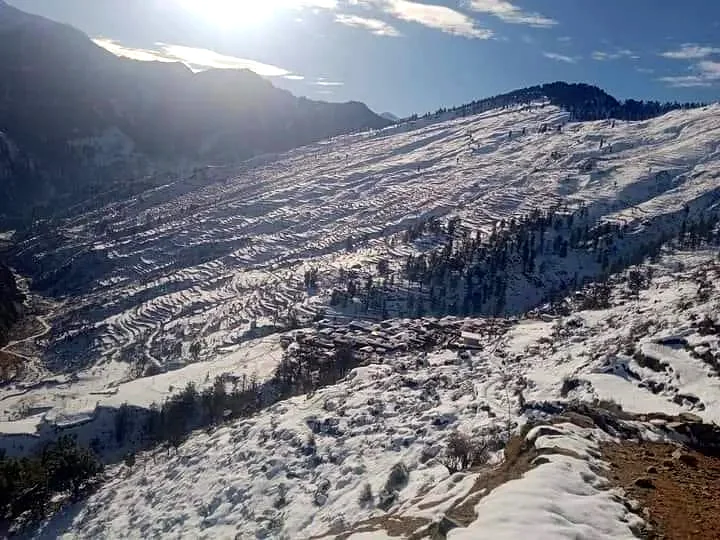
- Sankri Village: A heritage hub. Spend an afternoon walking through its apple orchards and admiring the traditional wooden architecture.
- Har Ki Dun Valley: If you have a few extra days, this "Valley of Gods" is a legendary neighbour to Kedarkantha, steeped in mythological history.
- Mori: A hidden gem by the Tons River — perfect for a post-trek "chill day" by the water before heading back to the city.
4. Experience & Precautions: The Humble Trekker's Mindset
We don't "conquer" the mountain; we prepare ourselves to be welcomed by it.
Base Layer
Moisture-wicking thermal — keeps you dry as you generate heat on the ascent.
Mid Layer
Warm fleece or down jacket — traps body heat when you stop or at camp.
Outer Shell
Windproof, waterproof hardshell — protects against snow, wind, and wet conditions.
- Physical Harmony: While Kedarkantha is beginner-friendly (Easy–Moderate), your body will thank you if you start 30-minute brisk walks or light cardio two weeks before arriving.
- The Layering Rule: The mountains are moody. The 3-Layer System above is your best friend.
- Altitude Respect: We climb slowly. Hydration is your best friend against altitude sickness. Listen to your body and your guides — there is no rush in paradise.
- Eco-Conscious Travel: We practice Leave No Trace. Bring a reusable water bottle and a mindset that leaves the trail cleaner than you found it.
If you experience persistent headache, nausea, or dizziness above 2,500 m, tell your guide immediately. The golden rule: never ascend with symptoms. Our guides are first-aid certified and carry pulse oximeters on every trek.
Essential Gear Checklist
Pack smart, pack light. Everything you need for this trek — nothing you don't.
- Warm fleece / down jacket
- Waterproof hardshell jacket
- Thermal base layer (2 sets)
- Trek pants (2 pairs)
- Warm gloves + liner gloves
- Wool/fleece balaclava
- Trekking boots (ankle support)
- Woollen socks (3–4 pairs)
- Microspike / gaiters
- Trekking poles (rentable)
- Sleeping bag (–10°C rated)
- Headlamp + spare batteries
- Sunscreen SPF 50+
- Sunglasses (UV400)
- Personal first-aid kit
- Water bottle (1L minimum)
- Dry bags / zip-lock bags
- Trek snacks & energy bars
Frequently Asked Questions
What is the best month to do Kedarkantha?
December to February for snow-covered forests and a classic winter summit experience. March–April for lighter snow and rhododendron blooms. September–November for crystal-clear skies and the best panoramic views.
Is Kedarkantha suitable for beginners?
Yes — it is one of the most beginner-friendly snow summit treks in India. If you can walk 5–8 km on flat ground comfortably and have reasonable fitness, you are ready. We will guide your pace throughout.
What is the maximum altitude and how does the body cope?
The summit stands at 3,800 m (12,500 ft). At this altitude, most acclimatised trekkers do fine with steady hydration and a slow ascent pace. We carry pulse oximeters and our guides are first-aid certified.
How do I reach Sankri from Dehradun?
Dehradun to Sankri is roughly 200 km — an 8–10 hour scenic drive through Mussoorie and along the Tons River valley. We arrange shared or private cabs from Dehradun depending on your group size.
Is solo trekking on this trail safe?
The trail is well-marked and popular, but solo trekking in winter carries real risk. We recommend joining a guided group. Our small-batch approach ensures you never feel lost in a crowd.
What is included in the Bugyal Trek package?
Guide, all meals on trail, campsite/homestay stays, forest permits, and a basic first-aid kit. Transport from Dehradun can be added. We share a detailed inclusions list before you pay — no surprises.
What temperatures should I expect?
Daytime on trail: 5°C to –2°C. Nights at camp: can drop to –10°C to –15°C in peak winter. Proper layering (thermal + fleece + hardshell) is essential — see the gear list above.
Can I rent trekking gear from you?
Yes. We rent jackets, sleeping bags, trekking poles, and gaiters from Sankri. Let us know your dates and sizes when you enquire — we will reserve the right equipment for you.
Ready to summit Kedarkantha?
Spots fill up fast in the winter season. Tell us your dates and we'll send a custom quote within 24 hours.